Weave Crochet Ends by Looking at the Actual Fabric
A useful tail route follows the structure of the fabric and remains unobtrusive when the piece moves. Practise on a spare swatch, keep the yarn label and inspect both sides. No single tail treatment is ideal for every yarn or stitch pattern.
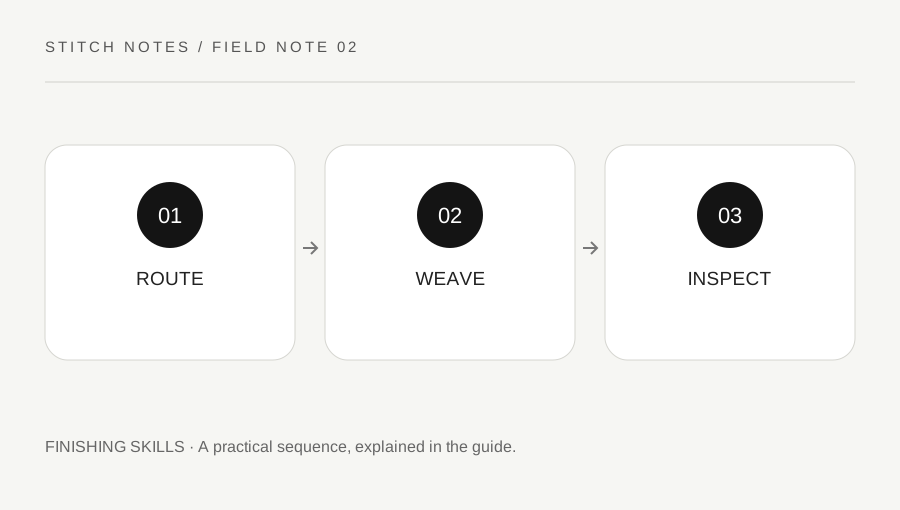
Original explanatory diagram. Examples illustrate a method or decision; they are not claims of personal testing.
Identify the area you are finishing
Look at the actual stitches around the tail and identify the side that will normally face outward. A dense plain swatch, a ribbed piece and an open motif provide different places to conceal an end. Use the pattern's finishing directions where supplied, especially when both sides of the object will remain visible.
Thread an appropriate blunt yarn needle without forcing a large tool through delicate stitches. Keep enough tail to control the route comfortably. If an end is already unusually short, pause and seek a suitable technique for that particular situation instead of cutting it shorter or assuming a small knot will resolve every finishing problem.
Choose a route that stays within the structure
A common approach carries the tail through an appropriate part of several stitches and changes direction to help secure it. The Craft Yarn Council's instructional material provides background on this principle. The exact route depends on the yarn and fabric, so use a spare sample to check whether the tail remains hidden without changing the surface.
Avoid drawing the route tight enough to gather the row. Lay the fabric in its normal shape and leave it able to move as intended. Do not pass a contrasting tail across a visibly open area and expect the colour to disappear. A method that is unobtrusive on a dense matching-colour sample may be conspicuous on a loose or multicoloured project.
Separate concealment from security
An end can be invisible at first and still require a better securing method. Conversely, a firmly held end may create a visible ridge or an uncomfortable lump. Judge both properties. For an item with a particular intended use, follow its actual pattern and yarn guidance rather than treating a display swatch as proof of long-term performance.
Do not state that a tail will survive every washing method or years of use based on a quick tug. Keep care conditions appropriate to the actual yarn. If you are finishing an object for someone else, provide the relevant care information and inspect the finished work carefully. This guide offers a practice process, not a durability certification.
Make an original two-route sample
Use spare fabric with two suitable ends in the same colour. On one, choose a route through a denser section; on the other, try a different suitable path recommended for the fabric. Label the samples with the route and yarn. Keep all tests within the material's ordinary handling and care limits rather than deliberately damaging the fabric.
Compare both sides at rest and during gentle appropriate movement. Note whether a ridge appears, the edge draws inward or the tail becomes visible. The useful record is a specific observation, not simply neat or messy. This invented exercise helps you evaluate the route you actually used; it does not claim that either sample represents a universally superior finishing method.
Trim only after a useful inspection
Check that the route is complete and the fabric has returned to its normal shape before deciding how to finish the remaining tip. Follow the chosen method and pattern rather than trimming every end to the shortest possible length by habit. Keep the area accessible until you are satisfied with the finishing.
Store the sample and a small note if the yarn is unfamiliar. A future project using the same fibre and structure may benefit from that reference, while a different structure still needs its own check. The aim is to build an understandable finishing habit: choose a route, preserve the fabric, inspect the result and avoid hiding an unresolved end beneath later assembly.
A practical checklist
Choices are saved in this browser. Reset them here or clear this site’s browser storage.
Questions that come up
Is crocheting over an end always enough?
Not for every yarn, structure or use. Follow a suitable finishing method and inspect the actual fabric; concealment alone does not establish security.
Should I pull the woven tail very tight?
No. Avoid gathering or distorting the fabric. The route should secure the end while allowing the intended movement.
Can one sample prove long-term durability?
No. A sample supports a specific observation under the conditions used, not a guarantee about every future wash or use.
References & scope
Background references checked on 18 October 2026. Worked examples and diagrams are original teaching material.