Unravel Crochet Back to a Known Point Without Losing the Next Step
When an error needs to be removed, stop and identify the last reliable point before pulling out work. A controlled return makes it easier to resume the correct instruction. Practise on ordinary spare yarn before attempting a difficult textured project.
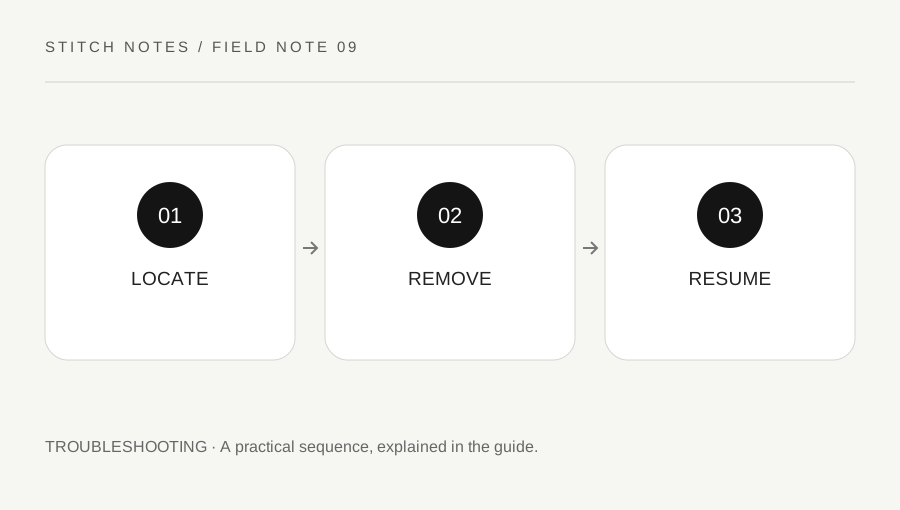
Original explanatory diagram. Examples illustrate a method or decision; they are not claims of personal testing.
Identify the actual error first
Compare the fabric with the relevant instruction and expected count. Decide whether the problem is a misplaced stitch, an incorrect repeat or something else. Do not remove several rows simply because an edge looks different from a photograph; first establish what the pattern asks the actual fabric to do.
Mark or record the last point you understand, including the row and position within its repeat. For a plain practice swatch, that may be the end of a correctly counted row. More complicated shaping may need a designer's clarification. A useful correction begins with a specific discrepancy and a destination, rather than pulling yarn until the fabric happens to look more familiar.
Check whether the yarn can be handled easily
Some yarns separate more readily than others. Work slowly with the actual material and stop if fibres catch or the structure is unclear. Do not yank a resistant strand or cut through fabric in an attempt to make an unfamiliar project unravel. Use suitable technique guidance or assistance when the yarn requires a different approach.
Keep the removed yarn controlled so it does not become a second tangle across the workspace. Leave the rest of the project supported rather than hanging from the active area. This guide concerns a controlled practice correction in crochet; it is not a method for undoing every finished seam, woven tail or specialized yarn structure.
Remove work toward the known point
Release the active loop through an appropriate method and undo stitches gradually, watching the fabric and the yarn path. Slow down as you approach the recorded destination. Preserve a usable active loop and place it back on the appropriate hook with its structure understood before making new stitches.
Do not assume that the number of loops visible on the hook tells the whole story about where the pattern resumes. Verify the last completed stitch and the next instruction against the actual row. For a left-handed or right-handed maker, the viewing direction may differ; identify the real stitch structure rather than copying a directional shortcut that does not match your working method.
Use a small original correction exercise
On a spare plain sample, work a correctly counted row and record its endpoint. Add a short additional section, then practise removing only that section and returning to the known row. Recount the retained row before restarting. The exercise is about locating a reliable point, not about producing a finished object.
Write what made the restart clear: a marked row end, an accurate count or a note describing the next instruction. If the return point remains uncertain, stop and inspect before repeating the error. The invented exercise builds a controlled observation habit without claiming that every crochet mistake should be corrected in the same way or that any yarn will tolerate repeated removal equally well.
Resume with a short checked section
Read the intended next instruction again and work only a small section before checking it. Confirm the count or repeat relationship while the corrected area is still easy to see. Avoid making several unverified rows simply to regain the previous height quickly.
Record the correction in a project note when it explains a later difference or a deliberate adjustment. Keep the description factual: removed the mistaken row and resumed at the marked point is more useful than fixed everything. A successful correction has an identified issue, a known retained section and a verified restart, with the actual yarn and pattern governing what can be safely and usefully undone.
A practical checklist
Choices are saved in this browser. Reset them here or clear this site’s browser storage.
Questions that come up
Should I cut through a tangled crochet area?
Do not use cutting as a general shortcut. Pause and obtain suitable guidance for the actual yarn and structure when gradual removal is unclear.
Can the same direction cue work for everyone?
Not necessarily. Left-handed and right-handed viewing can differ. Identify the actual stitch structure and the pattern position.
How much should I redo before checking?
Begin with a short verified section. Checking early makes a repeated misunderstanding easier to locate.
References & scope
Background references checked on 18 October 2026. Worked examples and diagrams are original teaching material.