Keep a Portable Crochet Project Kit Small and Complete
A portable project kit should contain the specific work, tools and reference information needed for the next session. Start with an ordinary move between rooms or a local activity. Carrying every spare supply can make the current project harder to manage.
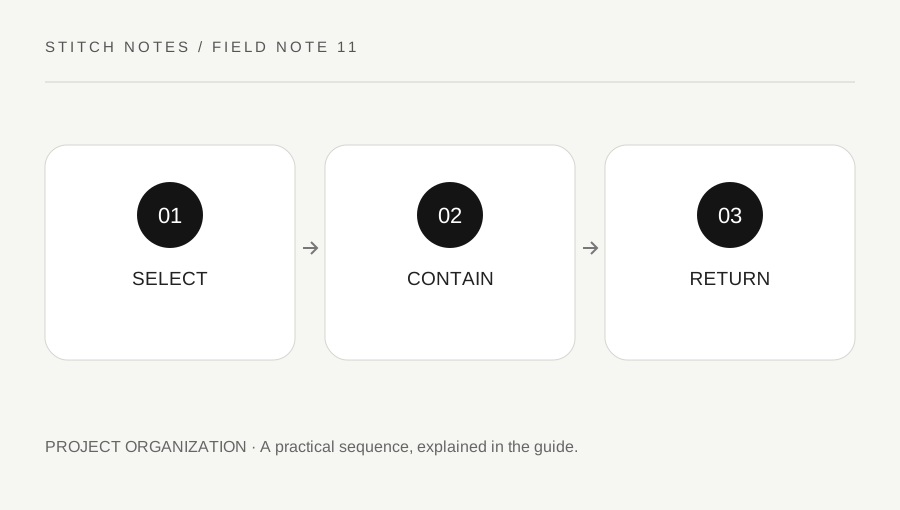
Original explanatory diagram. Examples illustrate a method or decision; they are not claims of personal testing.
Pack for the next actual task
Identify what you plan to work on in the next session. Include the actual project yarn, hook, progress note and permitted pattern access needed for that task. A project that will only need another plain section may require a different kit from one entering assembly. Do not add every tool you own simply because an organizer has empty pockets.
Keep any needed finishing tools appropriately protected and controlled. The kit should suit its real users and setting, especially where children or other people may encounter small tools. This guide is about organization, not permission to carry particular objects through transport security or into a venue. Check the responsible authority's current rules if that becomes relevant.
Protect the project and working yarn
Secure the active loop with an appropriate method and support the fabric while packing. Keep the supply yarn arranged so it can feed without immediately tangling with loose tails or unrelated notions. Do not compress delicate work merely to make a smaller bag appear sufficient.
Use a container that suits the actual materials and can be carried comfortably. An existing suitable bag may be enough. Check whether the hook, markers and progress note remain findable without emptying everything onto a shared table. A useful kit separates items by their role in the next session, rather than hiding a large mixed collection inside several nested pouches.
Keep the reference information together
Include the actual hook identifier, yarn label information and current pattern position. Keep modifications visibly separate from the original instruction. If using a device for a permitted digital pattern, check that you can access the needed material in the setting where you will work. Do not assume an online page will be available when the connection is absent.
Avoid placing private account credentials or unnecessary personal records in the project tag. A pattern reference should identify the material without exposing how someone logs into a service. Preserve the yarn's care information for later finishing and the final recipient where useful. The tag is a practical index to the project, not a substitute for the actual pattern or product instructions.
Use a small kit audit example
Imagine a maker moving a simple practice scarf between a living room and a weekly craft group. The kit contains the scarf, its yarn, the correct hook, a protected small notions holder and a clear restart note. Spare unrelated yarn and several alternative hooks stay in the main supply storage because the planned session does not require them.
After the session, the maker checks that the active loop is held and returns each tool to its assigned place. They record one actual change to the pattern position. This invented example illustrates a bounded kit, not a recommendation for a specific product or a guarantee that the same contents suit every craft setting.
Reset before the next move
Review consumable or easily misplaced items after real use. Replace something only when it is actually missing or unsuitable, rather than buying a second complete kit to avoid looking through the first. Keep the next-session task visible so finished materials do not continue travelling indefinitely.
When the project ends, return tools to their ordinary storage, preserve useful yarn and care information, and close the progress note. A portable kit is useful because the current project can be started and packed away with little searching. It should remain a temporary working arrangement around a real task, rather than become another permanent container of unfinished decisions.
A practical checklist
Choices are saved in this browser. Reset them here or clear this site’s browser storage.
Questions that come up
Do I need a special project bag?
Not necessarily. An existing suitable container may work if it protects the materials and makes the needed tools easy to find.
Does this guide determine transport rules?
No. Check the current responsible transport or venue authority if rules about carried items apply.
What should remain on the project tag?
Use the relevant yarn, hook, pattern reference and progress position. Keep passwords and unnecessary private details elsewhere.
References & scope
Background references checked on 18 October 2026. Worked examples and diagrams are original teaching material.