Pause a Crochet Project with a Secure Loop and a Useful Restart Note
A paused project needs its active loop protected and its next instruction recorded. A small restart note can prevent unnecessary recounting and guessed repeats. Keep the information with the actual yarn and fabric rather than only in memory.
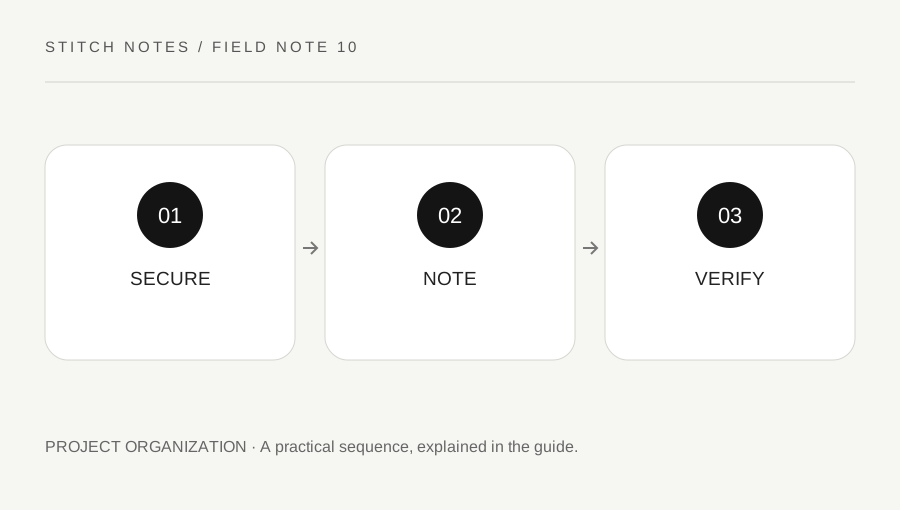
Original explanatory diagram. Examples illustrate a method or decision; they are not claims of personal testing.
Stop at a point you can explain
Where practical, pause after a complete stitch and identify the current row or round. If you must stop inside a repeat, note the precise position rather than writing only the row number. Do not invent a completed repeat because it makes the note shorter. The actual fabric should support what the record says.
Check whether a temporary marker already identifies the row start or another important location. Keep its meaning clear. Several identical markers with unexplained roles can create more uncertainty than one well-labelled reference. A note such as completed the second group in row four gives a more useful restart point than continue here, provided that wording matches the actual pattern.
Protect the active loop appropriately
Use an appropriate removable stitch marker or another supported project-holding method to keep the active loop from being accidentally pulled out. Avoid piercing or damaging the yarn. A hook left in an unsecured loop can slide out during movement, so check the actual arrangement before putting the project away.
Keep the working strand separate from any loose finishing tails. Do not pull the supply strand while packing if doing so tightens or distorts the active area. Store the fabric so its weight is supported and the yarn can return to ordinary working tension. The right holding method depends on the project and tools, not on a universal requirement to use one particular marker product.
Write a compact restart record
Include the pattern name or reference, terminology convention, actual hook identifier, yarn information and the last completed instruction. Add a count only if you genuinely checked it. Distinguish the written pattern from any deliberate modification so the future restart does not quietly erase a change you already made.
Keep the relevant yarn label or a clear record of its content and care information. Craft Yarn Council's resources provide background on terminology and care labels; this restart record is an original organization method. Do not copy an entire copyrighted pattern into a shared note merely to make the project portable. Use the pattern through its permitted access and keep the note focused on your own progress.
Test the note before relying on it
Imagine a maker stopping after the third completed repeat in a plain practice row. They secure the active loop and write the next instruction in their own progress note, with the correct row and terminology reference. They then set the work aside briefly and return using only that note and the actual pattern.
If they cannot identify the next stitch confidently, they clarify the note while the recent work is still familiar. This invented test does not claim a memory benefit or a guaranteed error-free restart. It checks a practical property: whether the saved record and visible fabric lead to the same next instruction without requiring a guess.
Verify the fabric when returning
Read the restart record, inspect the loop and markers, and compare the actual stitches with the recorded position. Check that the hook and yarn are the intended ones before continuing. If something has moved or unravelled, establish the real state rather than assuming the note overrides visible evidence.
Complete a short section and check the count or repeat relationship before proceeding far. Update or remove a temporary marker when its purpose ends. A useful pause routine is small enough to repeat during ordinary interruptions: protect the loop, record an honest position and verify that position on return. It supports continuity without pretending a notebook can preserve the physical project by itself.
A practical checklist
Choices are saved in this browser. Reset them here or clear this site’s browser storage.
Questions that come up
Is the row number alone enough?
Sometimes, but not when you stop inside a repeat or use several similar sections. Record the precise last completed instruction when needed.
Can a note replace securing the loop?
No. The physical project still needs an appropriate holding and storage method.
What if the fabric disagrees with my note?
Inspect the actual state and establish the correct position. Do not continue by treating the saved note as proof that nothing moved.
References & scope
Background references checked on 18 October 2026. Worked examples and diagrams are original teaching material.