Fasten Off Crochet with a Tail You Can Actually Finish
Fastening off closes the active loop; securing the remaining tail is a separate finishing step. Practise both on a small spare swatch before ending an important piece. These instructions use US crochet terminology and an original observation exercise.
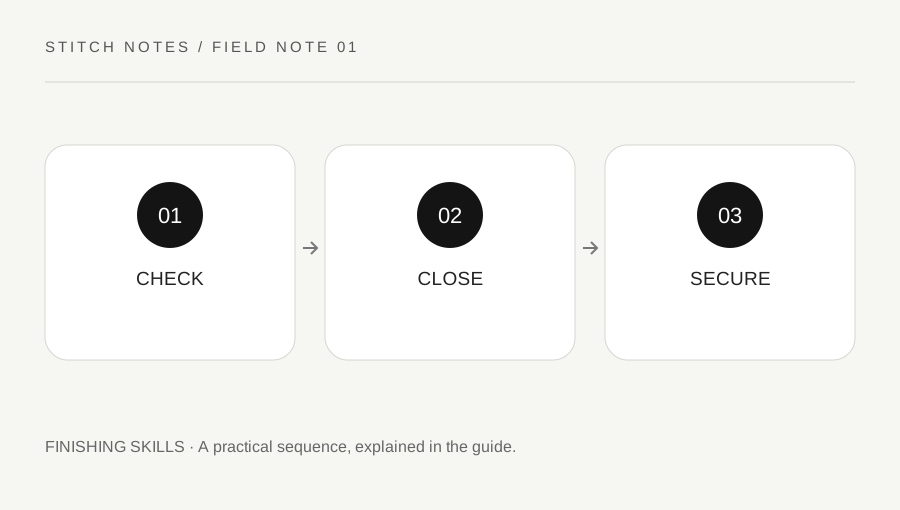
Original explanatory diagram. Examples illustrate a method or decision; they are not claims of personal testing.
Check that the section is really finished
Read the next instruction in the actual pattern before cutting anything. A section may continue into a border, join another piece or ask you to leave a tail for sewing. Fasten off only when that is the intended next step. Keep the yarn attached while you resolve an uncertain instruction rather than making a cut that creates avoidable extra ends.
Lay the work where you can see the final stitch and active loop. Check the completed section against its expected count or endpoint. This is not a substitute for the pattern's own instructions. For an ordinary practice swatch, choose a clearly completed row so you can concentrate on the finishing action without simultaneously diagnosing shaping or a complicated stitch repeat.
Close the active loop deliberately
For a basic fasten-off, cut the working yarn with a useful tail, draw that tail completely through the active loop and snug it gently. Use the length required by your pattern and finishing method; a tail intended for sewing needs a different allowance from a short practice ending. Do not cut right beside the loop and expect a tiny remaining end to be easy to secure.
Keep scissors and needles appropriately stored and controlled while working. Avoid pulling so hard that the final stitch becomes distorted. The aim is a closed ending that preserves the fabric's ordinary outline. A tight visible nub and an altered corner are reasons to inspect the finishing tension, not evidence that the piece has become more secure.
Separate the ending from weaving in
The remaining tail still needs a suitable finishing method for the yarn and fabric. Thread it through an appropriate yarn needle and plan where it can be concealed without drawing the edge inward. Follow the pattern's finishing instruction and test the method on spare material where the yarn behaves differently from your usual choice.
Do not assume a tightened final loop means the tail can be trimmed immediately. An open or lacy area provides different concealment opportunities from dense single crochet. Keep enough working tail to make the intended route comfortably. The separate weaving-in guide in this journal explores the inspection process in more detail; this page focuses on completing the active loop without losing your finishing allowance.
Use a small practice comparison
Make two simple spare swatches with the same yarn and stitch structure. End each according to a suitable basic method, leaving a usable tail. On one, deliberately observe the final corner before and after gentle snugging. On the other, focus on keeping the last row relaxed while drawing the tail through. Do not intentionally create an insecure finished object for ordinary use.
Compare the outlines and write one useful observation, such as the corner remained level or the last stitch tightened visibly. These are original practice prompts, not results from a product test. Keep the samples labelled with the yarn and method so a later inspection has context instead of relying on a vague memory that one ending looked better.
Inspect before trimming or assembly
Look at both sides of the ending after the tail is secured by the chosen method. Gently handle the fabric as appropriate for its intended use and check for obvious distortion or exposed loose ends. Follow the yarn's care instructions for any later finishing or washing; do not apply heat or moisture merely because a different fibre tolerated it.
Record an unresolved issue before joining the piece into something larger. Correcting a finishing problem can be easier while the area remains accessible. A useful final check distinguishes three states: the row is complete, the active loop is closed and the tail has been secured. Keeping those steps separate prevents an apparently finished swatch from concealing unfinished work.
A practical checklist
Choices are saved in this browser. Reset them here or clear this site’s browser storage.
Questions that come up
Does fastening off finish the tail?
No. It closes the active loop, but the remaining yarn end still needs a suitable secure finishing method for the actual yarn and fabric.
Can I use one tail length for every project?
Follow the pattern and finishing method. A tail used to sew a seam needs a different allowance from an ordinary small practice ending.
Should the last stitch be pulled extremely tight?
No. Snug the ending while preserving the fabric. Excessive pulling can distort the last stitch or corner.
References & scope
Background references checked on 18 October 2026. Worked examples and diagrams are original teaching material.