Change Crochet Colour at a Row End and Keep the Transition Understandable
A deliberate row-end colour change separates the completed row, the turning instruction and the new colour. Practise with two contrasting yarns of suitable matching characteristics. The example uses US single crochet and makes no claim of a tested finished pattern.
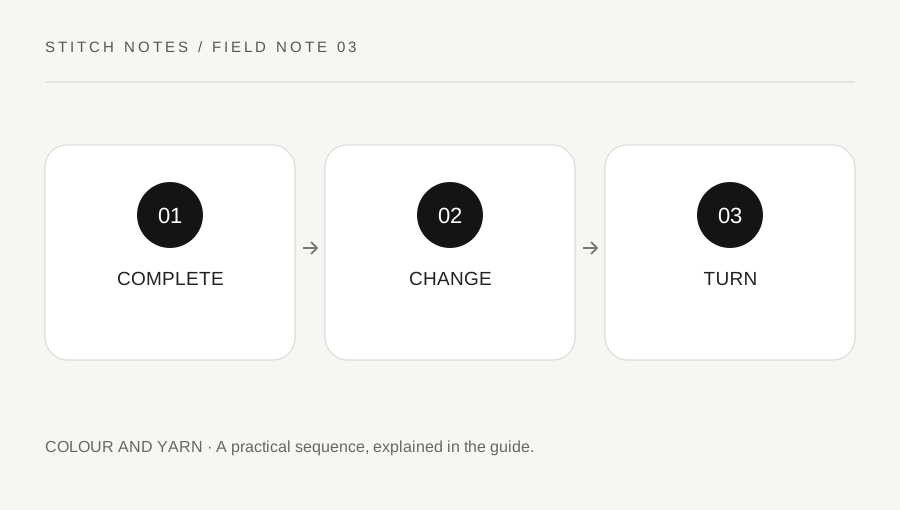
Original explanatory diagram. Examples illustrate a method or decision; they are not claims of personal testing.
Check the pattern’s transition instruction
Read whether the new colour starts during the last stitch, after fastening off or through another specified method. Check whether the turning chain counts as a stitch in that pattern. Do not combine fragments from two different tutorials and assume they describe one continuous instruction.
Choose spare practice yarns that allow the stitch structure to remain visible. Keep the labels so you know what you used. Two colours with very different thickness or behaviour can add a second problem to the exercise. Begin with a simple flat sample rather than trying to learn the transition inside a complicated garment or a tightly controlled colour chart.
Make the colour change at the intended step
For the common method of changing on the final pull-through of a US single crochet, work the last stitch to its final yarn-over, then use the new colour to complete it. Continue with the actual turning instruction for your practice row. Lion Brand's colour-change guidance illustrates this general transition; a particular pattern may direct a different method.
Leave usable ends for an appropriate finish. Keep the old and new strands identifiable so you do not accidentally work with a tail instead of the supply yarn. Snug the transition gently without drawing the corner inward. A clean colour boundary should not require a distorted last stitch or an extra unplanned stitch at the edge.
Inspect the first new-colour row
Find the first intended stitch and work according to the established row count. Keep a marker in a useful edge position if that helps identify the structure. This page is about the colour transition, while the journal's counting guide explains general edge counting. Use the pattern's stated count to check that the change has not quietly added or removed a stitch.
Lay the swatch flat and look at the colour boundary on both sides. A transition can look different on the return side without automatically being an error. Record where the change occurred and whether the new-colour stitches began in the intended place. A close inspection is more useful than judging the sample from a distant photograph.
Work a small original observation exercise
Make a plain twelve-stitch practice row using the counting method you already understand. Change colour at the end through a suitable supported method, then work the next row with the same intended twelve stitches. The number is simply a manageable exercise size, not a complete project pattern or a promise of a particular finished width.
Check the count before and after the transition and note the edge shape. If the count differs, locate the first or last stitch before assuming the colour technique itself is wrong. Keep the sample as a reference with the yarn, hook and transition note. The invented exercise supports a specific learning question: can you change the active colour while preserving the row structure?
Finish the ends without hiding the evidence
Keep the transition visible while you secure the ends using a method suited to the yarn and fabric. Avoid pulling a contrasting tail across open stitches where it can show through. Follow the project's instructions for carrying, cutting and finishing yarn; those decisions depend on its design.
If a later row-end change is planned, write down the colour order before cutting a strand that the pattern expects you to carry. Do not assume that fewer ends is always the best goal. A useful colour-change routine preserves the intended fabric, leaves workable finishing ends and makes it easy to explain which stitch received the new colour.
A practical checklist
Choices are saved in this browser. Reset them here or clear this site’s browser storage.
Questions that come up
Does the turning chain always count?
No. Use the actual pattern’s convention. A colour change does not override its instruction about the turning chain or first stitch.
Why did my corner pull inward?
Inspect the transition tension and finishing route. Excessive pulling can distort the edge even when the stitch count remains correct.
Must I cut the old colour immediately?
Follow the pattern’s carrying and finishing method. A later return to that colour may use a different arrangement.
References & scope
Background references checked on 18 October 2026. Worked examples and diagrams are original teaching material.